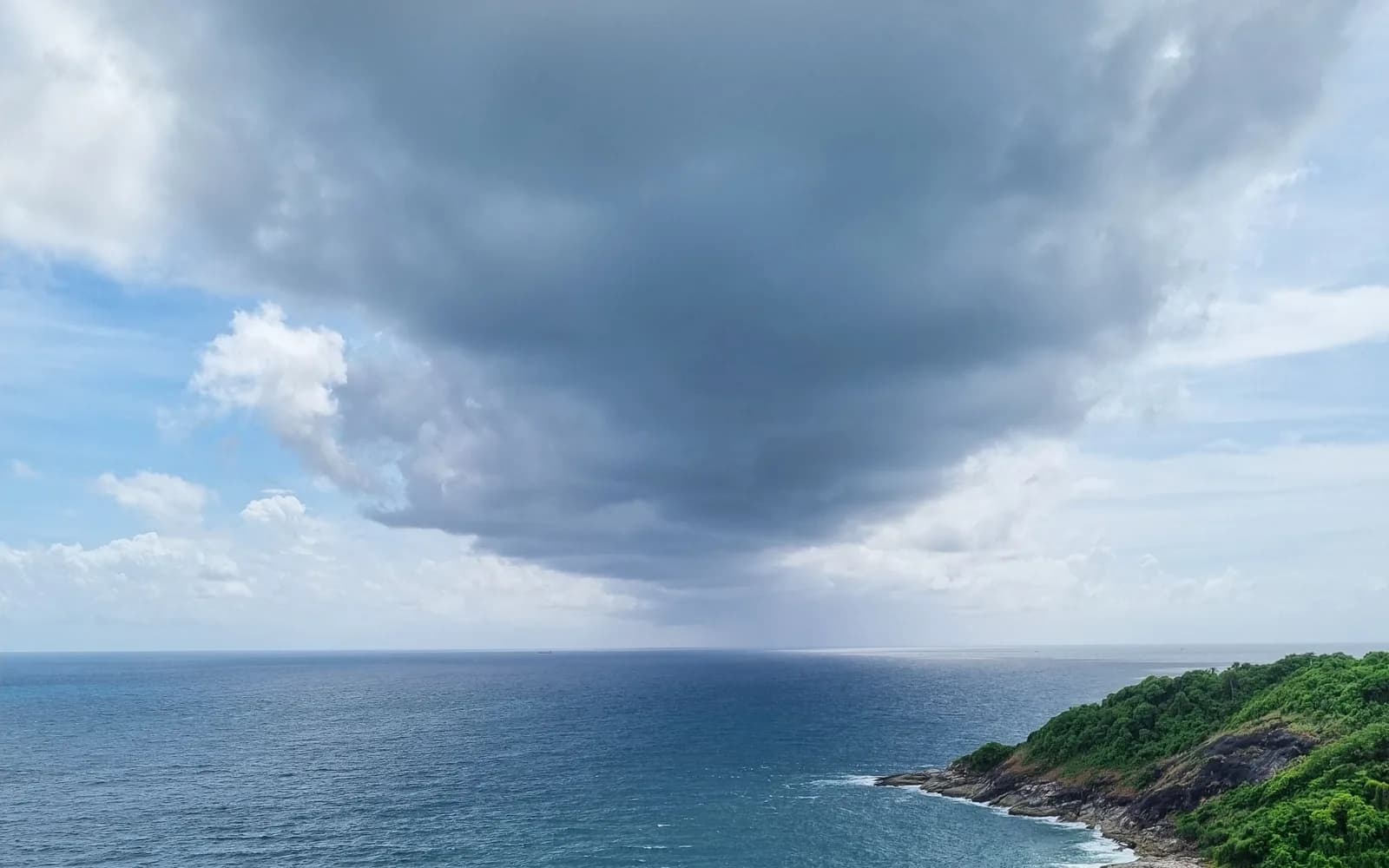
When to come, and what the sea is doing
Dry season, wet season, and the months nobody warns you about
Phuket has two seasons and the difference between them is not really rain. It is the sea.
From roughly November to April the Andaman is flat, every boat runs, and the west-coast beaches are calm. From roughly May to October the swell arrives, red flags go up, and island trips get cancelled at short notice. Prices follow the water.
November to April — the dry season
Calm sea, reliable sun, every boat and water sport operating. This is when Phuket looks like the photographs, and it is priced accordingly.
It is also the busiest window, so book boats and the better restaurant tables ahead rather than on the day.
May to October — the wet season
Lower prices, far fewer people, and a greener island. Rain tends to arrive in heavy bursts rather than all day, so a wet-season trip is not a write-off.
The real cost is the sea. Swell and rip currents build on the west coast, lifeguards fly red flags, and boat trips are cancelled when the water is bad. If a beach day is the whole point of your trip, this is the gamble.
Never swim past a red flag. People drown on this coast every year doing exactly that, and the currents do not look dangerous from the sand.
The months nobody warns you about
April and May are the hottest part of the year, before the rain breaks the heat. Midday is genuinely punishing — plan the temples and viewpoints for early morning.
October and November are the transition: cooler, and often still quite wet. Cheap, but you are buying a lottery ticket on the weather.
Maya Bay closes every year from 1 August to 30 September, which catches out anyone who booked a Phi Phi trip specifically to stand on that beach.
4 places
Listed in the order we would work through them.
4 places
 01
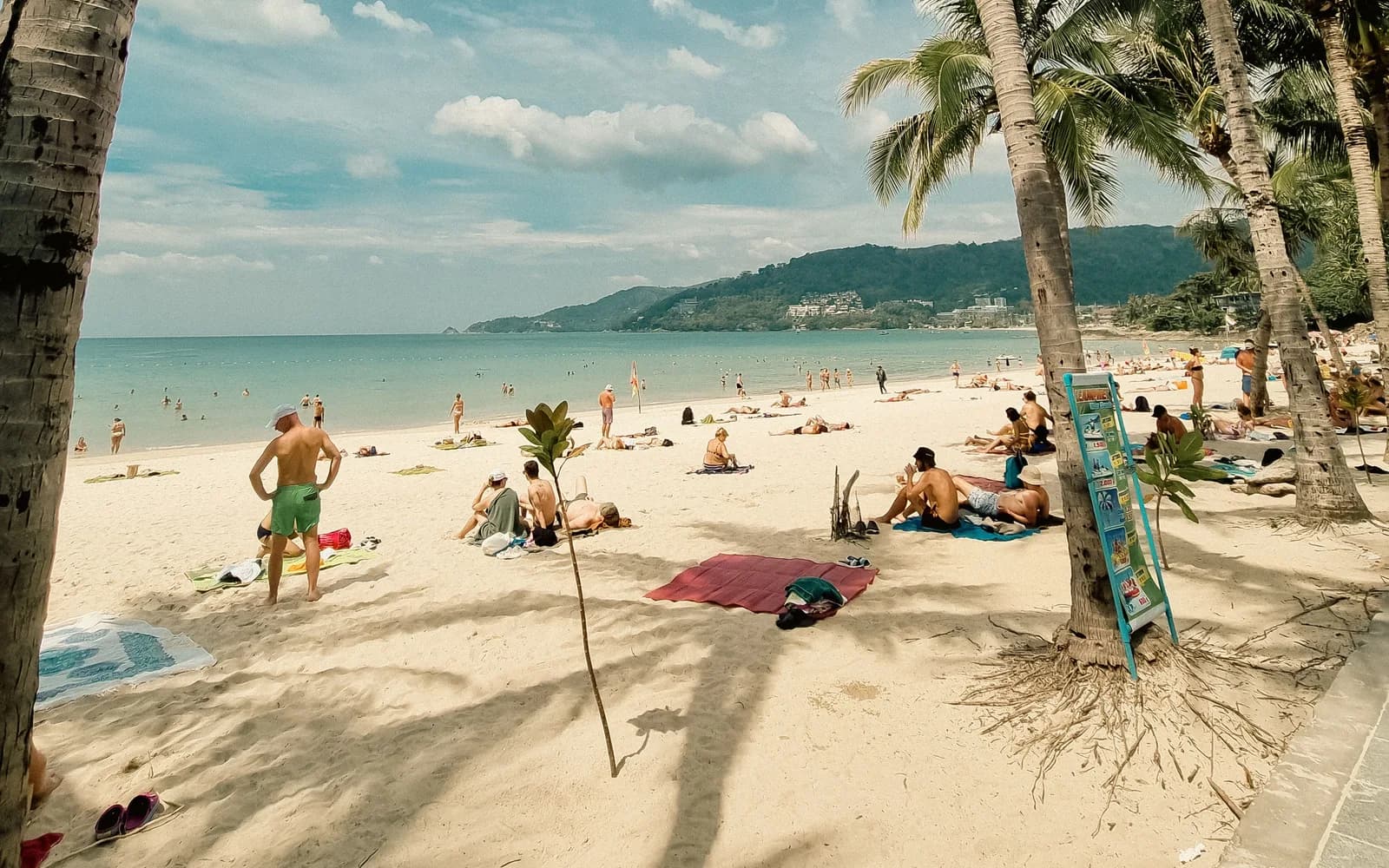
01Patong Beach
The loud one. Every water sport, every shop, and never a quiet moment.
The island's tourist engine: parasailing, jet skis, a thousand shops and Bangla Road behind it. Go if you want everything within walking distance and do not mind the noise. In low season, May to October, the rip currents here are serious — if a red flag is flying, stay out of the water.
Patong฿ CheapHalal: askFamily- Crowds
- Busiest beach on the island
- Swimming
- Red flag means out; rip currents May to Oct
- Facilities
- Sunbeds, food and shops everywhere
 02
02Kata Beach
Calm water in high season, surf lessons in low, and a town behind it.
The all-rounder: calm water through most of the high season, a proper little town behind it, and Phuket's main surf break from roughly May to October when board hire and lessons appear along the sand. Busy but never Patong-busy.
Kata฿฿ Mid-rangeHalal: askFamily- Crowds
- Busy, calmer than Patong
- Swimming
- Red flag means out; surf break May to Oct
- Facilities
- Sunbeds, food and surf hire
 03
03Nai Harn Beach
Locals' favourite. A lagoon behind it, hills around it, and deep water.
The beach Phuket residents actually use at weekends. A freshwater lagoon sits behind it, hills close in on both sides, and the bay is deep rather than a shore break. Parking fills early on Saturday and Sunday.
Rawai฿฿ Mid-rangeHalal: askFamily- Crowds
- Moderate, busier at weekends
- Swimming
- Red flag means out; deep, not a shore break
- Facilities
- Sunbeds and food available
 04
04Mai Khao Beach
Phuket's longest beach, right by the airport. Empty sand for kilometres.
Phuket's longest beach, eleven kilometres running north from the airport, backed by national park rather than development. Almost empty most of the year. Currents are strong in low season and lifeguard cover is thin — treat it as a walking beach, not a swimming one.
Mai Khao฿฿ Mid-rangeHalal: ask- Crowds
- Very quiet
- Swimming
- Red flag means out; strong currents, thin cover
- Facilities
- Resorts only, few public facilities
Photography is licensed stock, credited to Apisatjapong on Pexels. Some images show the named place; where no photograph of a venue exists, the picture shows Thailand rather than that venue.